


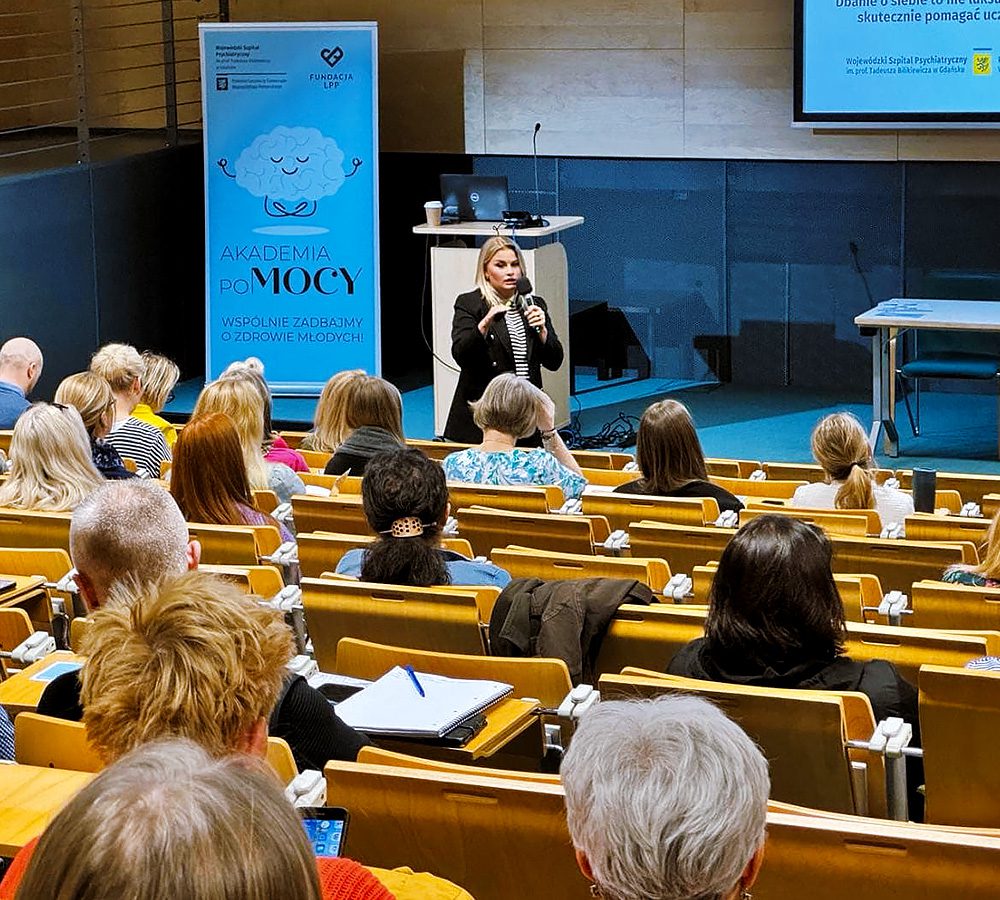
poMOCY Academy
The poMOCY Academy is a project aimed at providing teaching and psychological staff, as well as all those working with children and young people in the Pomeranian Province, with knowledge about where to seek help for young people in crisis situations.
It also aims to provide knowledge on how to recognise impending crises.
The poMOCY Academy operates as part of the cooperation between the LPP Foundation and the Prof. Tadeusz Bilikiewicz Provincial Psychiatric Hospital in Gdańsk.

The more awareness there is in a young person's environment, the greater the chance of a quicker response and effective support.
Why are we doing this?
Mental health crises among children and young people are a challenge we face more and more often. Not only is appropriate support crucial, but so is education – so that knowledge reaches where it is most needed: schools, counselling centres, care facilities and homes.
The PoMOCY Academy consists of workshops that deepen adults’ understanding of young people’s mental health, while emphasizing the importance of preventive measures and providing tools to help them work with young people’s emotions.
The poMOCY Academy – how does it work?
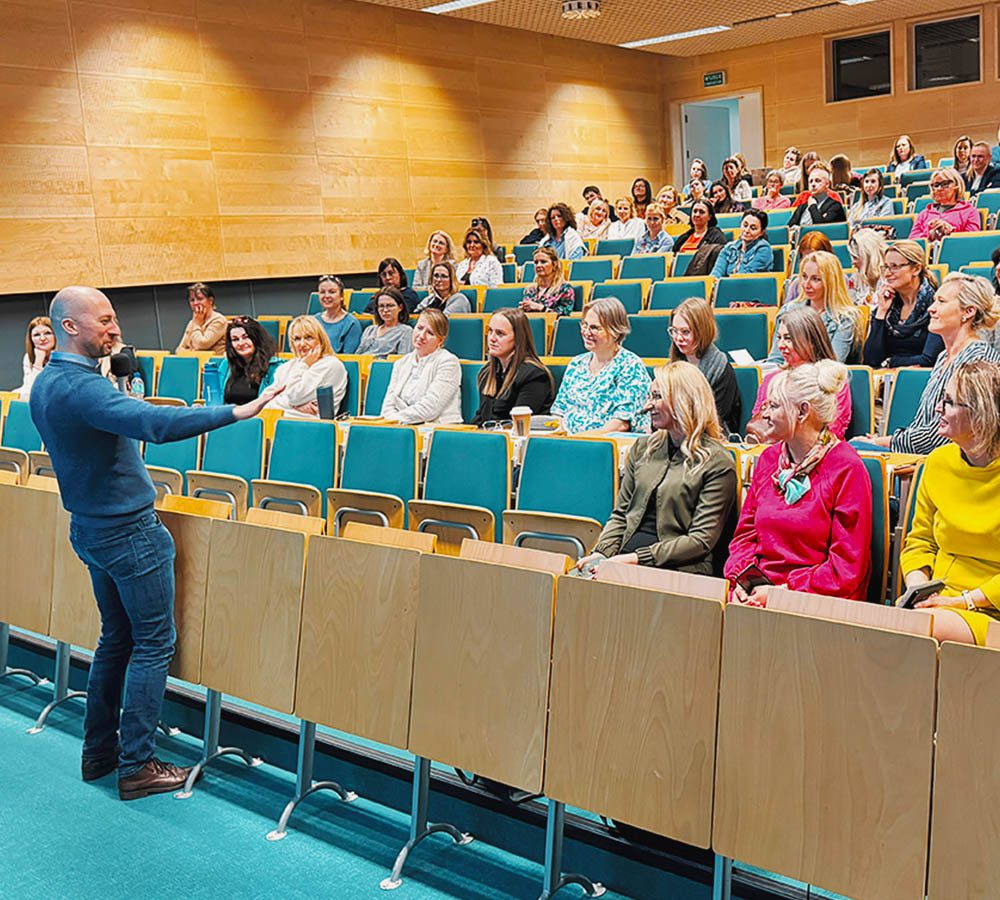
As part of the poMOCY Academy, 20 meetings were organized in all counties of the Pomeranian Voivodeship.
The meetings with representatives of schools, counseling centers, and urban and rural institutions that work with families were led by representatives of the Provincial Psychiatric Hospital in Gdańsk.
During the meetings, participants discussed the symptoms of mental health crises and learned where to seek help before going to the hospital.

Implementation and results of the poMOCY Academy
The project was developed during discussions between the LPP Foundation and experts from the hospital.
Together, we considered what preventive measures we could implement to prevent situations where the only possible option for help is a stay in a psychiatric hospital.
We believe that educating adults who work with children every day will enable them to more effectively identify concerning behaviors and recognize situations that require specialized support.