


LPP expands its partnership with Wtórpol and launches a new model of clothing collection
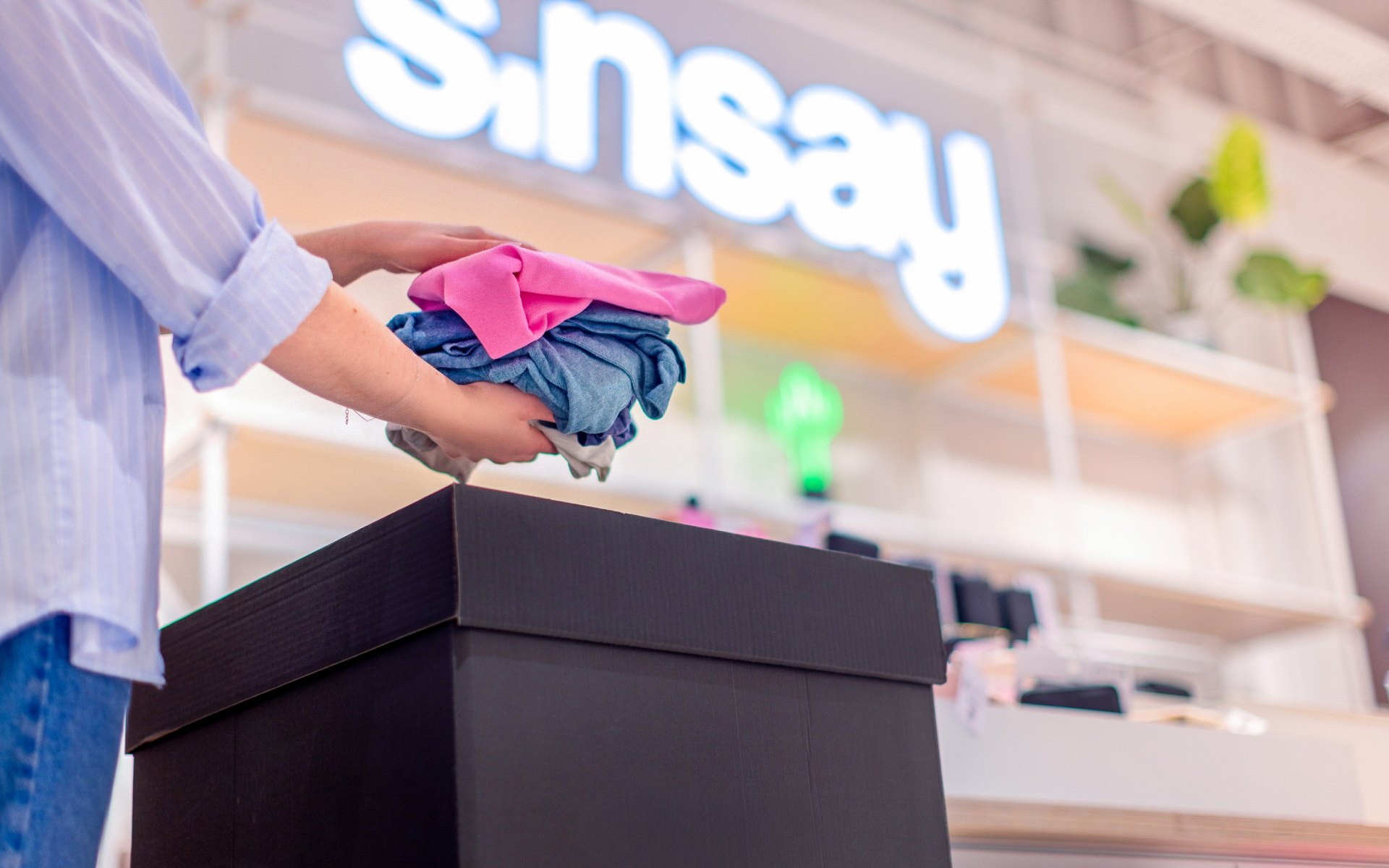
LPP is changing the model for the collection of second-hand clothing in its brand stores, which has been in place since 2018. Wtórpol – the national leader in the sorting and processing of textiles – has become the new partner responsible for organising and providing logistical support for the project. This partnership will enable the growing scale of collections to be managed efficiently and will ensure that donated clothes are reused or recycled in accordance with the principles of the circular economy. The overarching aim of the initiative remains to create an effective and accessible system for customers, enabling them to dispose of unwanted textiles easily and responsibly.
In recent years, the system for collecting second-hand clothing in Poland has undergone significant changes, linked, amongst other things, to the introduction of mandatory separate collection of textile waste. The new regulations have significantly increased the volume of clothing reaching collection points, presenting organisers with challenges regarding its further management. Similarly, in the case of the programme run by LPP, the volume of clothing collected at high-street stores has begun to grow rapidly – in the last year alone, the quantity has increased elevenfold.
– The clothing collection programme in LPP stores has been running since 2018, and from the outset its strength has been its accessibility to customers. With the entry into force of the new regulations and the sudden surge in the volume of donated clothing, we realised that the existing model would need to be adapted to the new situation. We were keen to find a systematic solution that would allow us to maintain a convenient collection method whilst maximising the potential of the donated textiles. Thanks to our extensive network of stores, customers can leave their clothes in a dry and secure place, safe in the knowledge that they will be put to the best possible use, for example through the second-hand market. We needed a partner with the right experience and operational capacity to meet the challenges that arise – says Ewa Janczukowicz-Cichosz, sustainability expert at LPP.
Until now, clothing collected at LPP brand stores was sent to charitable organisations, which distributed it to those in need. As the scale of the collection grew, the existing model ceased to be sufficient. The influx of clothes increasingly exceeded the current needs of recipients, a situation also influenced by the composition of the donated items – a significant proportion consisted of women’s clothing, whilst demand for this was limited. As a result, the efficient management of all donated items required significantly greater logistical and organisational capacity, which the social partners were no longer able to handle on their own.
In response to the changing circumstances, LPP decided to expand its cooperation with Wtórpol – one of Poland’s largest organisations specialising in the sorting, recovery and reuse of textiles. The two companies had previously collaborated on the collection scheme operated at LPP brand stores. Wtórpol was responsible for managing part of the clothing stock, whilst also recovering items which, after re-sorting, could be returned to the second-hand market. Experience to date has shown that working with a partner possessing the appropriate expertise and infrastructure enables the effective management of large volumes of clothing.
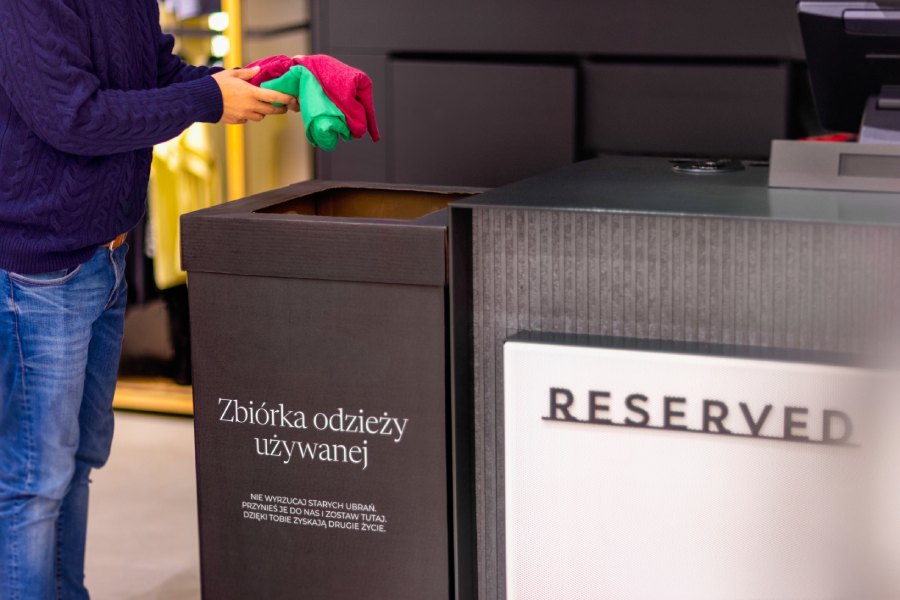
Under the new model, Wtórpol will assume full responsibility for the operational and logistical aspects of the programme – from the collection and transport of clothing, through its professional sorting, to its subsequent processing. For customers themselves, the rules governing the collection scheme remain unchanged. A key element of the project will continue to be the extensive network of LPP brand stores, where clothing collection bins remain available as usual. The existing bins – both plain black ones and those bearing the LPP Foundation logo – will be gradually replaced with new ones featuring the Wtórpol logo. Until the replacement process is complete, customers can continue to use all the collection bins available in the stores without any issues.
The advantage of the new collection model lies not only in the scale of Wtórpol’s operations, but also in how the collected textiles are managed. The company carries out the entire process in Poland, relying mainly on clothing from domestic collections. All garments undergo manual sorting, which allows their condition to be accurately assessed and ensures they are channelled along the correct route. As a result, only those items that have a realistic chance of being given a new lease of life are returned to circulation. This applies to as much as 80 per cent of the clothing from LPP stores, which is reused. The remainder is processed in its entirety: cotton is turned into industrial cleaning cloths supplied to over 6,000 companies in Poland and abroad; wool returns to the market as a secondary raw material; and other materials are recycled or used to produce RDF alternative fuel.
– What happens to clothing at the end of its useful life is of huge importance for the efficient use of resources. Every year, we process around 76 million kilograms of textiles, giving them a new lease of life or sending them for further processing in line with the principles of the circular economy. However, building an effective secondary circulation system requires close cooperation at every stage of the product life cycle. We are delighted that, together with LPP, we will be developing a solution that will make it easier for consumers to dispose of unwanted clothing responsibly and allow its potential to be maximized – says Monika Lipnicka from Wtórpol.
The clothing collection programme at LPP stores continues to have a social dimension. For every kilogram collected, Wtórpol donates 50 groszy towards the running of the programme and to charitable causes designated by LPP. The aim of the initiative remains to create an effective system that enables the responsible management of unwanted clothing and textiles, combining environmental goals with social engagement.
_________________________________
LPP is a Polish family business and one of the fastest growing clothing companies in the region of Central Europe. For 30 years, it has been successfully designing and selling the collections and accessories in Poland and abroad. LPP manages five fashion brands: Reserved, Cropp, House, Mohito, and Sinsay, whose offer is available today in stationary and online stores in 47 markets worldwide. The company has a chain of over 3,800 stores with the total area of over 3 million m2 and distributes the products to 3 continents every year. LPP also plays an important role as it provides employment to nearly 63 thousand people in its offices and sales structures in Poland, Europe, Asia, and Africa. The company is listed on the Warsaw Stock Exchange in the WIG20 index and belongs to the prestigious MSCI Poland index.